The Map Under Your Feet
Look closely at any carpet that has been down for a few years, and a map appears. A darker path down the hallway. A flattened patch right inside the bedroom door. A dull strip along the front edge of every stair. The rest of the room may still look almost new.
That map isn’t random. Carpet wears where people walk, turn, pivot, and pause, and in most homes those spots are surprisingly predictable. Technicians who do carpet cleaning raleigh nc homes can often guess the layout of a house just by looking at where the carpet is tired. The front door, the route to the kitchen, the path to the couch, the stairs.
Robert Frost wrote, “The best way out is always through.” Carpet would add a footnote: and every time someone goes through, a little wear stays behind.
Why Some Spots Wear Faster
Grit acts like sandpaper
Shoes and bare feet carry tiny particles of sand and grit. Each step presses those particles into the carpet, and as fibers flex, the sharp edges cut and scratch them. Over months, fibers lose their shine and shape. That’s why worn areas often look dull and gray even after cleaning – it’s not dirt; it’s damaged fiber that scatters light differently.
Pressure flattens pile
Carpet fibers are designed to spring back after being stepped on. Repeated pressure in the same spot eventually wears that resilience down. The pile mats, tangles, and stops recovering.
Turning grinds in soil
Walking straight puts pressure on carpet. Turning adds a twisting motion that grinds soil deeper and frays the fiber tips. That’s why corners, landings and doorways wear faster than straight stretches.
The Usual Suspects
Every home has its own pattern, but some zones show up again and again:
- the first few feet inside the front and back doors
- hallway centers, especially between bedrooms and bathrooms
- the front edge, or nose, of every stair
- landings where stairs change direction
- the spot in front of the couch or favorite chair
- doorways into kitchens and bathrooms where people pivot
Stairs: The Hardest-Working Carpet in the House
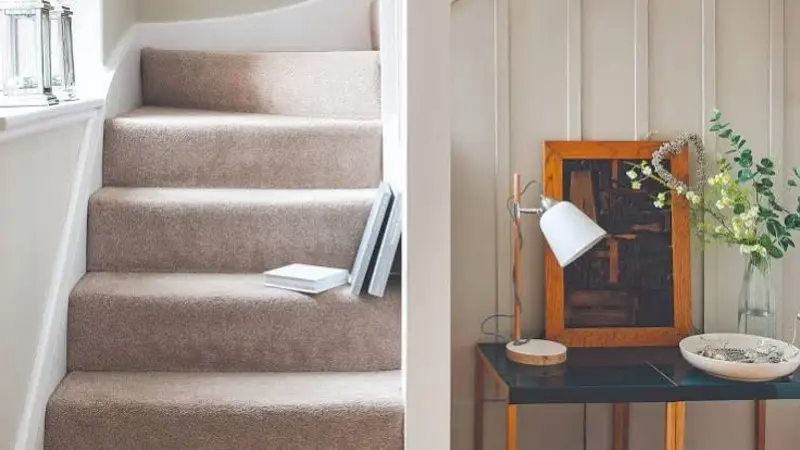
Stairs deserve their own section. Every step concentrates the full weight of a person on a small area, and the stair nose takes the most punishment because feet push off from it.
Stair carpet also bends over an edge, which stresses the fibers and backing more than flat carpet. It’s one reason stairs often show wear years before the rest of the home.
Regular vacuuming of each tread, including the corners where dust gathers, helps more than most people expect. A handheld vacuum or upholstery attachment makes the job much faster.
Slowing the Wear
Carpet will always wear somewhere. But the rate can be slowed significantly:
- Place mats at every entrance so less grit reaches the carpet in the first place.
- Vacuum high-traffic areas more often than low-traffic ones, ideally several times a week.
- Use runners or area rugs in hallways and other heavy paths.
- Rearrange furniture occasionally to shift traffic patterns.
- Encourage a shoes-off habit, especially during wet or muddy seasons.
- Schedule professional cleaning regularly to remove embedded grit before it cuts fibers.
The last point is often misunderstood. Some people avoid cleaning carpet because they think it wears it out. In reality, embedded grit does far more damage than proper cleaning ever could. Removing it extends carpet life.
The Couch Effect
One spot that often surprises homeowners is the area right in front of the sofa. People sit, stretch their legs, shuffle their feet, and get up again, dozens of times a day. Feet rest there for hours, and socks rub the pile back and forth. A small rug or a periodic furniture shift spreads that wear out, and the difference becomes obvious within a year or two.
Can Worn Areas Be Fixed?
It depends on the damage. Matted pile can sometimes be lifted with cleaning and grooming. Soil that makes traffic lanes look gray usually responds well to professional extraction.
But fibers that are physically worn, frayed, or crushed beyond recovery won’t come back. At that point, options include replacing sections, adding runners or rugs, or eventually replacing the carpet. Catching wear early keeps those options cheaper.
It’s often said online that regular professional cleaning can noticeably extend the life of a carpet, and many carpet manufacturers include cleaning requirements in their warranties for that very reason.
A Journey of Many Steps
The Tao Te Ching says that the journey of a thousand miles begins with a single step. A carpet in a busy home sees thousands of those steps every week, and each one leaves a tiny mark.
Knowing where the wear will show up makes it easier to protect those spots. A mat here, a runner there, more vacuuming in the hallway. Small choices that keep the map under everyone’s feet from turning into a highway.