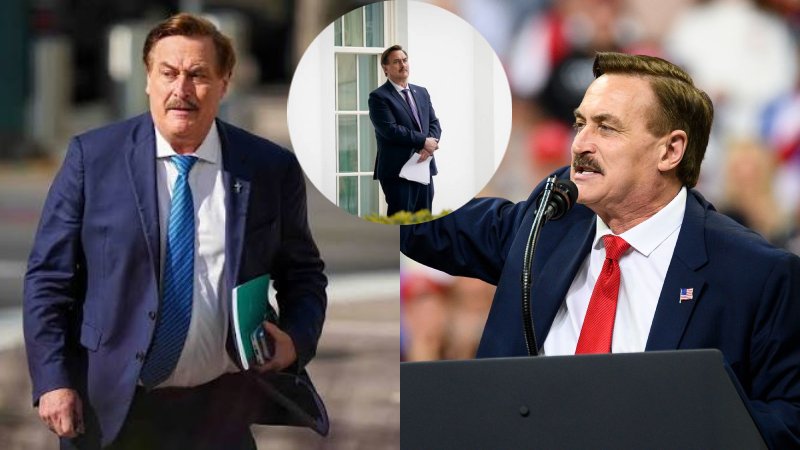
Mike Lindell has spent much of his public life moving from one arena to another. He first became widely known as the energetic founder and television face of MyPillow. Later, his personal story of addiction and recovery became part of his public identity. His close relationship with Donald Trump then transformed him into a nationally recognized conservative political activist.
In 2026, Lindell took another major step by entering the Republican primary for governor of Minnesota. His campaign attracted national attention after Trump endorsed him, but the race ultimately ended with Lindell finishing second to Minnesota House Speaker Lisa Demuth.
The aftermath was nearly as notable as the campaign itself. Lindell challenged aspects of the vote-counting process and sought a statewide hand recount. The Minnesota Supreme Court ultimately rejected his request, concluding that the state’s proposed recount procedures complied with Minnesota law.
For readers unfamiliar with Lindell, his story is about much more than politics. It includes entrepreneurship, addiction recovery, religion, business setbacks, a close political alliance with Trump, election-related controversies, and an unsuccessful attempt to become Minnesota’s Republican gubernatorial nominee.
Who Is Mike Lindell?
Mike Lindell is a Minnesota businessman and political activist best known as the founder of MyPillow.
Born in Mankato, Minnesota, in 1961, Lindell attended the University of Minnesota but left after only a short period. Before building his pillow company, he pursued several business ventures, including carpet cleaning, a lunch-wagon business, bars, and other entrepreneurial projects.
His early years were not defined solely by business ambitions. Lindell has openly discussed his struggles with addiction, including crack cocaine use, gambling, and financial problems. His personal experiences later became central to his public story and the memoir What Are the Odds? From Crack Addict to CEO, which he published in 2019.
Lindell has described his recovery as a major turning point in his life. His religious faith also became an important component of his personal narrative.
That transformation eventually led to the business for which he became famous.
The Rise of MyPillow
Lindell launched MyPillow in 2004, initially selling pillows at fairs and other events.
The company grew substantially over the following years, helped by aggressive direct-response advertising and Lindell’s distinctive television appearances. His enthusiastic sales pitches made him recognizable to millions of Americans, turning the entrepreneur himself into an important part of the MyPillow brand.
The company’s success made Lindell wealthy and gave him a platform that extended far beyond Minnesota.
But his business success did not prevent personal difficulties. Lindell has said that his marriage ended, that he experienced bankruptcy and that his addiction problems continued during the period when MyPillow was developing.
His recovery story eventually became one of the defining elements of his public image.
For readers interested in profiles of other personalities whose private lives have attracted public attention, you can also read this profile of Dallas Yocum.
How Donald Trump Changed Lindell’s Public Profile
Lindell’s transition from entrepreneur to political activist accelerated after he met Donald Trump in 2016.
Their relationship developed into a close political alliance. Lindell appeared at Trump events and became one of Trump’s most outspoken supporters.
Following Trump’s defeat in the 2020 presidential election, Lindell became especially prominent for promoting claims that the election had been manipulated. Those claims were not established by official election findings, and they resulted in extensive legal and financial consequences for Lindell.
His political activities increasingly became intertwined with his business identity.
Lindell continued supporting Trump even as lawsuits and business pressures mounted. His national profile therefore changed considerably: he was no longer simply the man behind a successful pillow company. He had become a recognizable figure in the American conservative movement and one of Trump’s most visible supporters.
Entering the Minnesota Governor’s Race
Lindell formally entered the 2026 Minnesota governor’s race in December 2025.
His campaign emphasized several themes, including combating government fraud, supporting businesses, and addressing addiction and homelessness. His own experiences with addiction and entrepreneurship became important components of the campaign’s message.
The campaign also reflected Lindell’s established political identity. His close relationship with Trump was a major part of his appeal to some Republican voters, while his history of promoting disputed election claims made him a controversial figure among others.
The Republican field included Minnesota House Speaker Lisa Demuth and businessman Kendall Qualls, among other candidates.
Lindell faced an additional challenge because the Minnesota Republican Party had endorsed Qualls rather than him. That meant his campaign was attempting to overcome the preferences of the state party organization while also seeking support from Trump’s national political network.
Trump Endorses Mike Lindell
The governor’s race received a major national boost in July 2026 when Donald Trump endorsed Lindell.
Trump publicly praised Lindell and backed his campaign for Minnesota governor. The endorsement reinforced the political relationship that had developed between the two men since their first meeting in 2016.
For Lindell, the endorsement provided another opportunity to present himself as Trump’s candidate in Minnesota.
But endorsements do not determine primary results. Minnesota Republican voters still had to choose among the candidates on the ballot.
Lindell Loses the Republican Primary
Minnesota Republicans voted in the gubernatorial primary on August 11, 2026.
Lisa Demuth finished first with approximately 43.4% of the vote, while Lindell received about 32.5%. Kendall Qualls finished third with roughly 21.4%. The final difference between Demuth and Lindell was approximately 45,000 votes.
The result ended Lindell’s immediate path toward the Republican nomination.
Demuth’s victory was notable for another reason. She became the Republican nominee for governor after defeating both the party-endorsed Qualls and Trump’s preferred candidate, Lindell.
For Lindell, however, election night did not mark the end of the story.
Lindell Questions the Vote Count
Following his defeat, Lindell raised questions about the counting of ballots.
He referred to what he described as “anomalies” and indicated that he wanted additional examination of the votes. However, there were no official findings establishing fraud or irregularities in the Minnesota Republican gubernatorial primary.
Lindell subsequently announced plans to personally fund a statewide hand recount and audit.
The estimated cost was approximately $825,000.
Minnesota’s election rules allow a losing candidate to request a discretionary recount when the candidate meets the applicable requirements and pays the associated costs. Because Lindell’s margin of defeat was substantially larger than the threshold for an automatically state-funded recount, he would have been responsible for the expenses.
Why the Recount Became a Legal Battle
The dispute was not simply about whether ballots could be counted again.
Lindell objected to the proposed scope and procedures for the recount. His campaign argued that the process should examine a broader set of election results and alleged anomalies.
Minnesota election officials took a different position. Their proposed recount would follow the procedures established under Minnesota law and would focus on determining the number of valid votes cast for the office being recounted.
The disagreement eventually moved into court.
Lindell did not provide the required payment or security for the estimated recount cost by the applicable deadline. Instead, he sought judicial intervention over the recount procedures.
That distinction became critical.
Minnesota Supreme Court Rejects Lindell’s Recount Request
On August 29, 2026, the Minnesota Supreme Court rejected Lindell’s petition.
The court’s order explained that Lindell had sought a broader recount based on what he described as election anomalies. The court distinguished between an administrative recount and an election contest, explaining that a recount is intended to determine whether votes were accurately counted, while a separate election-contest process addresses certain allegations concerning irregularities in an election.
The court concluded that Minnesota’s Secretary of State and Canvassing Board were following the state’s established recount procedures and had not committed the wrongful act or error alleged by Lindell.
The court also noted that Lindell had not met the financial requirement associated with the proposed recount. The estimated cost was $825,021.93.
As a result, his petition was denied.
The ruling effectively left Demuth’s Republican primary victory intact.
Lindell and MyPillow After the Campaign Began
The governor’s campaign also affected Lindell’s role at MyPillow.
In August 2026, Lindell stepped down as CEO of the company to devote himself fully to his gubernatorial campaign. He also reduced his ownership stake to a minority position while remaining on the company’s board of directors.
The decision demonstrated how seriously Lindell was pursuing the governor’s race.
For more than two decades, MyPillow had been closely associated with Lindell personally. His decision to step away from the CEO position represented a significant change for both the businessman and the company.
It also reinforced his argument that his political ambitions were not simply a short-term publicity exercise.
The Legal and Financial Fallout From Lindell’s Political Activities
Lindell’s political activism has carried significant legal and financial consequences.
His promotion of unsupported claims about the 2020 presidential election led to defamation litigation involving voting-technology companies. Reporting in 2026 documented settlements and court proceedings arising from those claims.
These legal disputes have become part of the larger story surrounding Lindell.
Supporters have continued to portray him as someone willing to challenge powerful institutions, while critics have argued that his election-related claims lacked sufficient evidence. Those competing interpretations have helped make Lindell one of the more recognizable and controversial political figures associated with the Trump movement.
What Makes Mike Lindell’s Story Unusual?
Lindell’s biography contains several distinct chapters that rarely appear together in one political career.
He went from struggling with addiction to building a major consumer brand. He became a television personality through MyPillow advertising. He later became a prominent Trump supporter and national political activist.
Eventually, he moved from political advocacy into electoral politics himself.
His 2026 campaign also demonstrated the complicated relationship between celebrity political endorsements, state party organizations and primary voters.
Trump supported Lindell. The Minnesota Republican Party had previously backed Kendall Qualls. Republican primary voters ultimately selected Lisa Demuth.
That sequence is important because it shows that Lindell’s national political profile did not automatically translate into a Republican gubernatorial nomination.
Mike Lindell’s Political Legacy
Whether Lindell runs for another office in the future remains a separate question from the outcome of the 2026 Minnesota Republican primary.
What is already clear is that his public career has undergone an extraordinary transformation.
He began as an entrepreneur attempting to build a business. MyPillow turned him into a household television personality. His recovery story gave him another dimension as a public figure. His alliance with Donald Trump then brought him into national politics.
By 2026, he was no longer simply a businessman expressing political opinions. He was a candidate for governor who had secured the endorsement of a sitting president, competed in a statewide Republican primary and subsequently taken his recount dispute to Minnesota’s highest court.
The primary ended with Lisa Demuth as the Republican nominee, while the Minnesota Supreme Court rejected Lindell’s attempt to obtain the broader recount he sought.
For Lindell, the campaign nevertheless represents another major chapter in a life that has repeatedly moved in unexpected directions.
Final Words
Mike Lindell’s journey from addiction and financial hardship to MyPillow entrepreneur and national political activist is unlike the conventional path into American politics.
His 2026 Minnesota governor campaign brought together nearly every element of his public identity: entrepreneurship, personal recovery, conservative activism, his long-standing relationship with Donald Trump and his determination to challenge election processes he questioned.
Although Lindell did not win the Republican primary, the campaign expanded the political chapter of his career. His subsequent recount dispute placed him at the center of a legal battle over how Minnesota election recounts should be conducted, ultimately resulting in a Minnesota Supreme Court decision against his petition.
His story continues to illustrate how a successful business career can evolve into national political influence—and how political influence, even with high-profile endorsements, remains distinct from winning an election.